What Is Ovulation?
Ovulation is the process in which a mature egg is released from one of the ovaries. After its release, the egg can be fertilised if sperm is present in the reproductive tract. This process is regulated by hormonal changes throughout the menstrual cycle.
In a typical 28-day menstrual cycle, ovulation is often estimated to happen around day 14. However, this is only an average, not a fixed rule. The timing can differ from woman to woman and may even change between cycles.
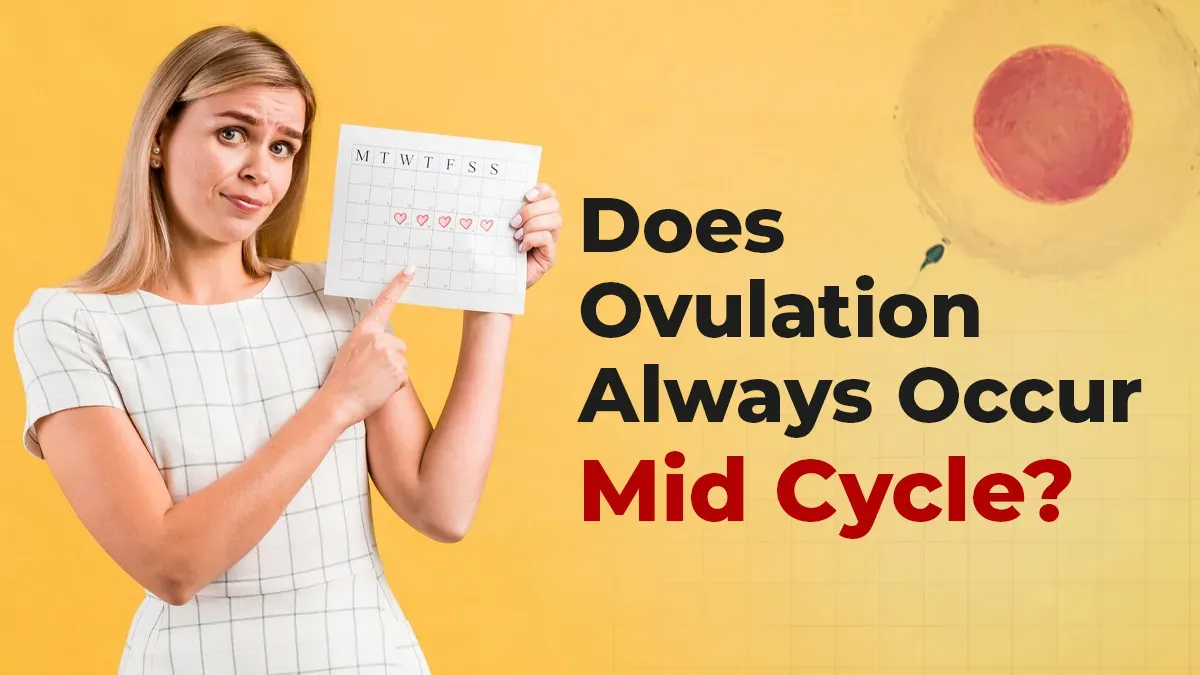
Does Ovulation Always Happen on Day 14?
No. Ovulation does not always happen on day 14. The timing depends on the length and pattern of your menstrual cycle. Some women may ovulate earlier, while others may ovulate later.
The first half of the menstrual cycle, known as the follicular phase, can vary in length. This variation affects when the egg is released. Therefore, counting 14 days from the first day of your period may not accurately identify your fertile days.
Dr. Pooja Thukral, Associate Director, Department of Obstetrics and Gynaecology at Cloudnine Group of Hospitals, Faridabad, explains:
"Your fertile window can shift from one cycle to another depending on the length and pattern of your menstrual cycle. Understanding when ovulation actually occurs can help if you are trying to conceive or simply want to understand your reproductive health better."
— Dr. Pooja Thukral
When Does Ovulation Usually Occur?
Ovulation generally occurs about 12 to 14 days before the next menstrual period, rather than necessarily 14 days after the previous period began. This means the timing of ovulation is closely related to the length of the menstrual cycle.
For example:
- In a 28-day cycle, ovulation may occur around day 14.
- In a 32-day cycle, ovulation may occur closer to day 18.
- In a 24-day cycle, ovulation may happen earlier.
These are general estimates, not exact predictions. Individual cycles can vary, and calendar calculations alone cannot confirm exactly when ovulation has occurred.
What Is the Fertile Window?
The fertile window is the period during which pregnancy is possible through sexual intercourse. It includes the days leading up to ovulation and the day of ovulation itself.
Sperm can survive in the female reproductive tract for several days under favourable conditions, while the egg remains available for fertilisation for a much shorter time after ovulation. This is why intercourse before ovulation can also result in pregnancy.
For couples trying to conceive, having intercourse regularly throughout the fertile window can help ensure that sperm are present when ovulation occurs. It is not necessary to rely only on ovulation day.
Signs That Ovulation May Be Approaching
Some women notice physical changes around ovulation. These signs can offer clues about the fertile period, although they do not confirm ovulation on their own.
Common signs and changes may include:
- Changes in cervical mucus: Discharge may become clearer, wetter, slippery and stretchy, often resembling raw egg white.
- Mild pelvic discomfort: Some women experience mild pain or discomfort in the lower abdomen around ovulation.
- Breast tenderness or bloating: Hormonal changes may cause temporary breast tenderness or bloating.
- Changes in mood or sexual desire: Some women notice changes around their fertile period.
- A rise in basal body temperature: Body temperature may increase slightly after ovulation due to hormonal changes.
These symptoms are not experienced by everyone and may have other causes. A rise in basal body temperature generally indicates that ovulation may already have occurred rather than predicting it in advance.
Can Ovulation Tests Help?
Yes. Ovulation predictor kits can help identify the approaching fertile period. These kits detect a rise in luteinising hormone (LH) in urine. The LH surge usually occurs shortly before ovulation, although the exact timing can vary.
A positive ovulation test suggests that ovulation may be approaching, but it does not guarantee that an egg has been released. This distinction is particularly important for women with irregular cycles or certain hormonal conditions.
What If Your Periods Are Irregular?
Predicting ovulation can be more difficult when periods are irregular. If your cycle length changes significantly from month to month, counting days may not accurately identify your fertile window.
Several factors and health conditions can affect menstrual cycles and ovulation, including:
- Polyendocrine ovarian syndrome (PMOS)
- Thyroid problems
- Significant changes in body weight
- Excessive exercise
- Stress
Tracking cervical mucus, using ovulation predictor kits and discussing your cycle pattern with a healthcare professional may be more useful than relying on a fixed cycle day.
Can You Ovulate Without Noticing Any Symptoms?
Yes. Some women do not experience noticeable signs of ovulation. They may not notice changes in cervical mucus, pelvic discomfort or other physical symptoms.
The absence of ovulation symptoms does not necessarily mean ovulation has not occurred. Similarly, experiencing these symptoms does not prove that an egg has been released.
If knowing the exact timing of ovulation is important, particularly when trying to conceive, a healthcare professional may recommend ultrasound monitoring or hormone testing where appropriate.
When Should You Consult a Gynaecologist?
Consider consulting a gynaecologist if your periods are consistently irregular, you are unable to identify your fertile window, or you have concerns about ovulation and conception. A medical evaluation can help identify possible factors affecting your menstrual cycle and guide the next steps.
Women looking for guidance on ovulation, irregular periods or fertility concerns in Faridabad can consult Dr. Pooja Thukral, Associate Director, Department of Obstetrics and Gynaecology at Cloudnine Group of Hospitals, Faridabad.
Frequently Asked Questions
No. Day 14 is an estimate based on a typical 28-day menstrual cycle. Ovulation can happen earlier or later depending on cycle length and hormonal patterns.
Ovulation generally occurs about 12 to 14 days before the next period. The fertile window includes the days leading up to ovulation and ovulation day. Calendar calculations are estimates, particularly if your periods are irregular.
Yes. Pregnancy is possible on ovulation day. However, the days before ovulation are also part of the fertile window because sperm can survive in the reproductive tract for several days under favourable conditions.
The days leading up to ovulation and ovulation day are considered the fertile window. Having intercourse regularly during this period can help improve the chance of conception.
Yes. Some women do not experience noticeable ovulation symptoms. The absence of pelvic pain or changes in discharge does not necessarily mean ovulation has not occurred.
Yes. Irregular menstrual cycles can make ovulation difficult to predict. Hormonal conditions, thyroid problems, stress, significant weight changes and excessive exercise may affect cycle patterns.
A qualified gynaecologist can evaluate menstrual cycle patterns, ovulation concerns and fertility-related questions. Women in Faridabad can seek guidance from Dr. Pooja Thukral at Cloudnine Group of Hospitals, Faridabad.
Conclusion
Ovulation does not always happen on day 14. This is simply an estimate for a typical 28-day cycle, and the actual timing can vary between women and from one cycle to another. Understanding your menstrual cycle, observing changes in cervical mucus and using ovulation predictor kits can help you understand your fertile window better.
If you have consistently irregular periods, difficulty identifying ovulation or concerns about getting pregnant, consult a gynaecologist for personalised guidance. Understanding your reproductive health is an important step towards making informed decisions about conception and fertility.